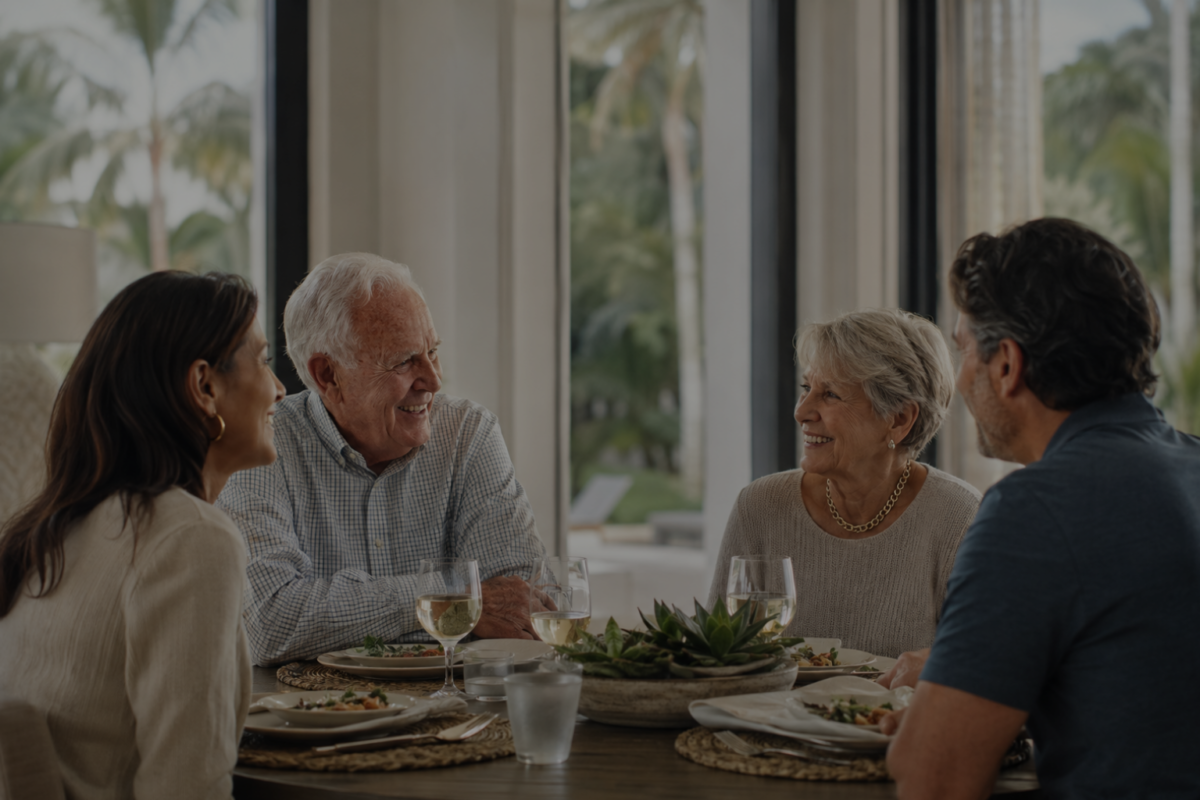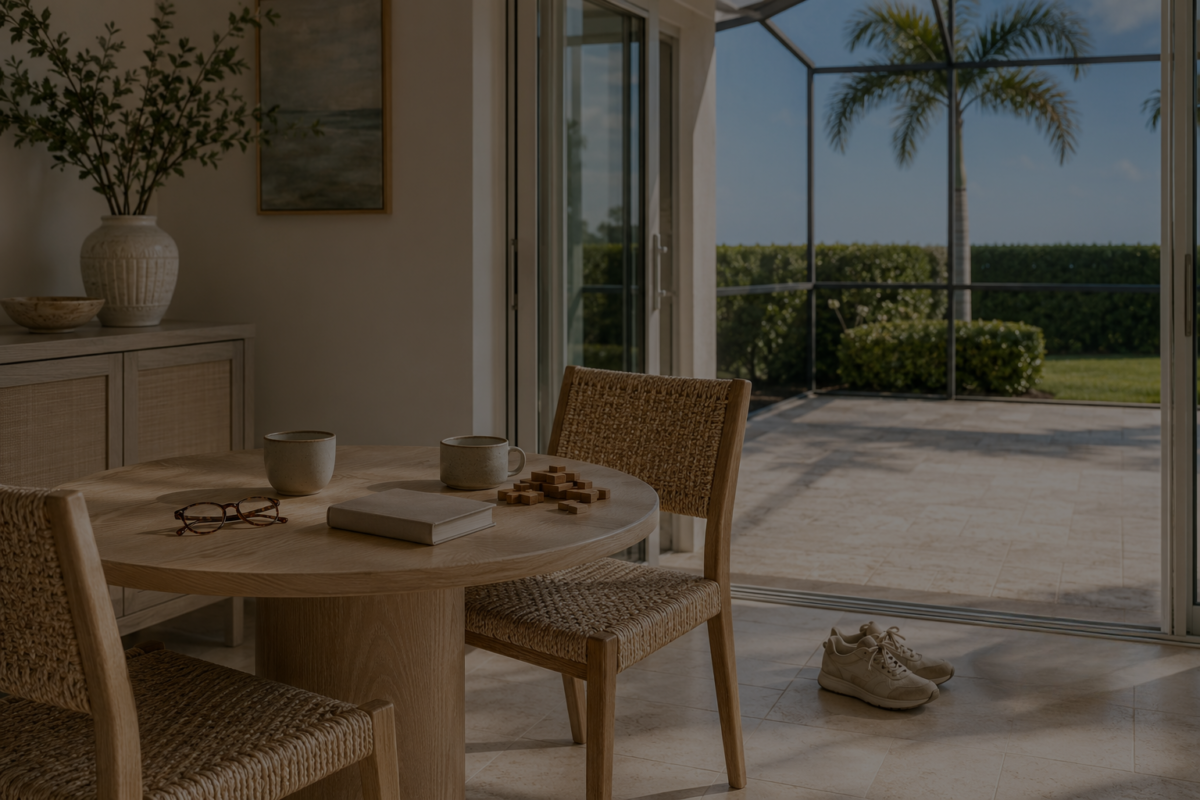
Most elder adults intend to remain in their own homes for as long as they can, yet the same research that documents this preference finds that the homes themselves are rarely built to keep pace with the people in them.
The intention is nearly universal and well recorded. The Harvard Joint Center for Housing Studies reports that the great majority of older adults expect to remain in their own homes and communities, and that the fastest-growing part of the older population is those over eighty, among whom the need for an accessible home is greatest. The homes themselves were not designed for that arc. In its projections on older households, the Joint Center estimated that forty-four percent of households headed by someone sixty-five or older have some need for accessibility features, while fewer than a third of American homes offer even the basic ones, such as a no-step entry and a bedroom and full bathroom on the entry level.
Set against that gap is a substantial body of research on what the familiar home actually holds. Environmental gerontology describes a long-occupied home as a store of continuity, the setting in which identity, memory, and daily competence are anchored. Studies of place attachment tie a familiar environment to security, belonging, and social connection, and associate that attachment with measurable well-being in later life. Remaining in place, in this literature, means far more than keeping an address. It means preserving the web of relationships, routines, and recognitions that a particular place accumulates over decades.
The evidence is equally clear that these benefits are conditional. What sustains independence is not the house itself but the fit between a person and their environment, and that fit shifts as capacities change. Research on person-environment fit finds that when a home is adapted to a resident’s functional needs, it continues to support independent living, and that when it is left unchanged, the same rooms that once held a life can begin to work against it. The home that preserves the most is the one kept current with the person inside it.
This is the quiet condition beneath the preference. A familiar home does preserve continuity, identity, and autonomy, but it does so actively, through maintenance and adaptation, not by standing still. The stairs, the thresholds, and the fixtures that went unnoticed at sixty become the terms on which a long independence is either extended or lost.
A home keeps what it keeps only for as long as it is kept.
Sources: Joint Center for Housing Studies of Harvard University, “Housing America’s Older Adults 2023”. Joint Center for Housing Studies of Harvard University, “Projections and Implications for Housing a Growing Population: Older Households 2015-2035” (2016). Laura L. Lien, Carmen D. Steggell, and Susanne Iwarsson, “Adaptive Strategies and Person-Environment Fit among Functionally Limited Older Adults Aging in Place,” International Journal of Environmental Research and Public Health 12, no. 9 (2015). “The Role of Place Attachment in the Relationship between Attitudes toward Aging and Subjective Well-Being among Community-Dwelling Older Adults in Taiwan”.